
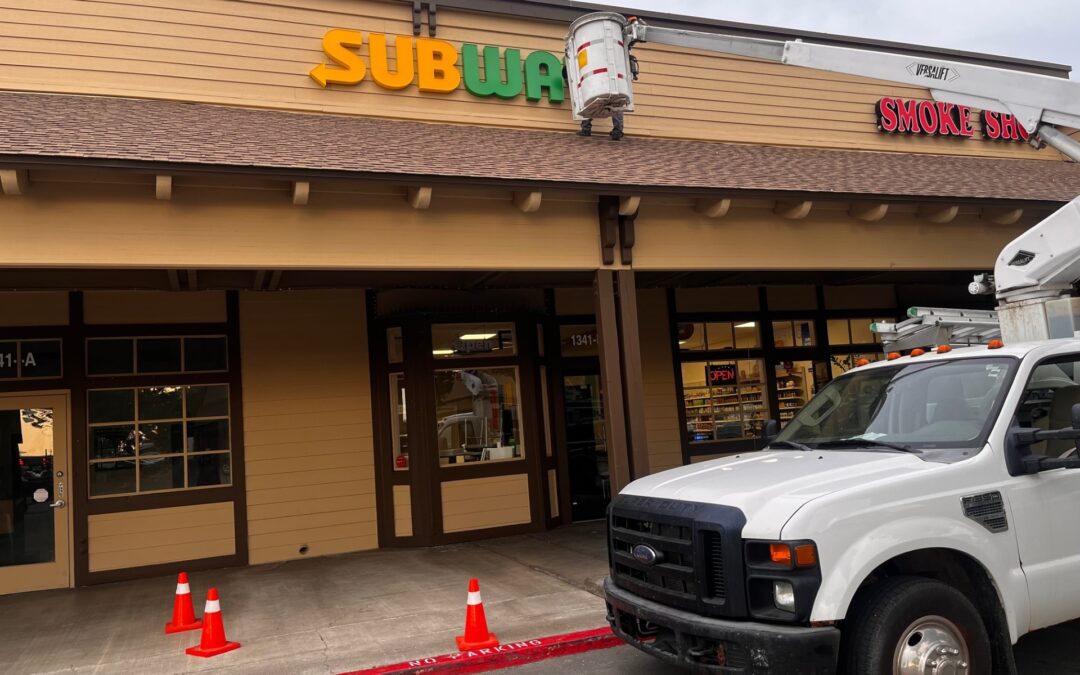
A sign that disappears after sunset is only doing half the job. For many storefronts, office buildings, retail centers, churches, and multi-tenant properties, illuminated business signs are what keep a location visible when traffic is still moving but natural light is gone. They do more than light up a name. They help people find the property, judge the professionalism of the business, and remember the brand.
That matters even more in California, where many businesses compete in dense commercial corridors, high-traffic shopping centers, and mixed-use developments. In those environments, a non-illuminated sign can look flat next to neighboring tenants. A well-built illuminated sign gives your location presence without relying on temporary banners, window clutter, or inconsistent lighting.
Why illuminated business signs matter
The first job of a business sign is simple: be seen. The second is more strategic. It should also support brand recognition, guide visitors, and hold up over time. Illuminated business signs do all three when they are designed correctly.
Visibility is the obvious advantage, but it is not just about nighttime exposure. Illumination can improve readability during early mornings, cloudy weather, shaded storefront conditions, and winter evenings when darkness comes sooner. For businesses with extended hours, restaurants, medical offices, gyms, convenience retail, and service-based companies, that extra visibility can directly affect walk-in traffic.
There is also a credibility factor. People make fast judgments about commercial properties. If a sign is dim, outdated, or partially burned out, it can make the business look neglected. If the sign is bright, clean, and proportioned correctly for the building, it sends a different message. It says the business is established, invested, and open for business.
The most common types of illuminated business signs
Not every sign should be built the same way. The right format depends on your building, viewing distance, brand standards, city requirements, and budget.
Channel letter signs
Channel letters are one of the most requested options for storefronts and commercial facades. Each letter is individually fabricated and typically illuminated with LEDs. They create a clean, professional look and can be front-lit, halo-lit, or a combination of both depending on the desired effect.
For many retail and office users, channel letters strike the best balance between visibility and brand presentation. They are especially effective when a business needs its logo or name to stand out on a larger elevation without looking bulky.
Cabinet signs and lightbox signs
Cabinet signs use an illuminated face panel within a framed structure. They are often used in shopping centers, roadside applications, and multi-tenant settings where a clear, readable display matters more than dimensional detail.
These signs can be a smart choice when budget, speed, and legibility are the main priorities. The trade-off is that they generally offer less architectural impact than channel letters.
Monument and pylon signs
For properties set back from the road, monument and pylon signs are often the real visibility drivers. Illumination is critical here because distance reduces readability, especially in the evening.
A well-designed illuminated monument sign can serve a medical campus, church, business park, or shopping center for years. A pylon sign can do the same for high-speed traffic corridors where drivers need more time and distance to identify a location.
Interior illuminated signs
Not all illuminated signage belongs outside. Lobby signs with backlighting or edge lighting can strengthen brand presentation in office interiors, hospitality spaces, and reception areas. These signs are less about traffic capture and more about creating a polished customer experience once visitors arrive.
What separates a good sign from a costly one
The problem with illuminated signage is not usually the idea. It is the execution. A sign can look good in a mockup and still become a maintenance issue if the materials, electrical components, or installation methods are poor.
LED quality makes a major difference. Reliable illumination should be even across the sign face, without hot spots, dead zones, or early failures. Better LED systems also improve efficiency and reduce service calls over time.
Fabrication quality matters just as much. Faces, returns, trims, mounting hardware, and internal components all need to be built for long-term use. In California, sun exposure can discolor lower-grade materials, and wind loads can expose weak engineering fast. A sign should be designed for the actual site conditions, not just for appearance.
Installation is another point where quality shows. A sign that is mounted incorrectly, wired carelessly, or installed without proper site review can create safety concerns, inspection delays, and expensive rework. That is why experienced project management matters. Good signage is not just manufactured well. It is coordinated well from survey to final inspection.
Permits, codes, and why local experience helps
Many buyers underestimate how much signage approval can affect a project timeline. Cities and property owners often have detailed standards covering sign size, illumination level, placement, structural details, and design compatibility.
For a single storefront, that might mean landlord criteria plus city review. For a franchise or multi-site rollout, it can mean a different set of permit requirements at each location. If those details are missed early, schedules slip and opening dates can get tighter than they need to be.
This is where a full-service signage partner brings real value. Design, fabrication, and installation are only part of the process. Permit coordination, submittals, code review, and communication with local jurisdictions are just as important. In counties and municipalities across California, that experience can save weeks of avoidable back-and-forth.
How to choose the right illuminated sign for your property
The best sign is not always the biggest or brightest one. It is the one that fits your site, your brand, and your operating needs.
Start with viewing distance. If customers approach at street speed from far away, you may need larger letters, stronger contrast, or a monument or pylon format. If the sign is mounted directly above a storefront entrance in a walkable retail center, readability at closer range may matter more than scale.
Next, consider your brand presentation. A law office, medical provider, church, restaurant, and national retailer do not need the same visual tone. Some want sharp, minimal halo-lit letters. Others need bold, high-output signage that competes with neighboring tenants. There is no single right style. It depends on the setting and the impression you want to create.
Then think long term. Lower upfront cost can be appealing, but signs that fade, fail, or require repeated repairs rarely stay cheaper. Durable materials, efficient LEDs, proper engineering, and a strong warranty usually deliver better value across the life of the sign.
What buyers should ask before approving a sign project
Before moving forward, ask how the sign will be fabricated, what materials will be used, whether permit handling is included, who performs installation, and what kind of warranty backs the finished work. These questions are not just procedural. They tell you whether the provider is managing the full project or simply selling a sign component.
It is also worth asking about service after installation. Even a quality sign may eventually need maintenance, electrical troubleshooting, or damage repair. Working with a company that can support the sign after the install helps reduce future downtime and finger-pointing.
That is one reason many commercial clients prefer an end-to-end provider such as California Sign Company. When one team handles design, permitting, fabrication, installation, inspection, and ongoing support, the process tends to be faster, clearer, and easier to control.
A sign should keep working after the install date
Illuminated signage is not just a finishing touch on a building. It is a business asset that works every day, often long after other advertising has stopped running. When built well, it helps customers find you, strengthens your brand, and supports the value of the property itself.
If you are planning a new location, updating an aging storefront, or managing signage across multiple sites, the right decision usually comes down to durability, visibility, and execution. A good illuminated sign gets attention. A great one keeps doing it for years.