
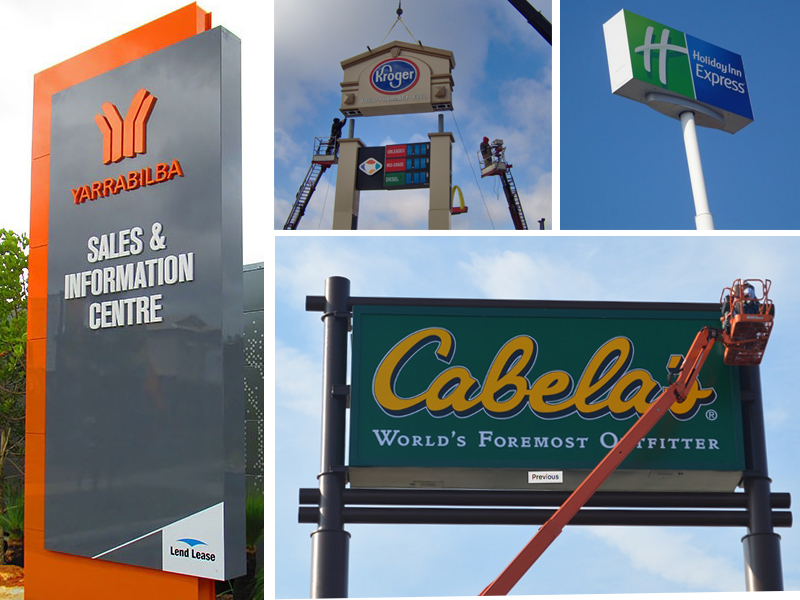
A pylon sign usually gets judged in a few seconds from the road, but the part that determines whether it performs for years is the part most people never see. Pylon sign installation is where engineering, permitting, site access, electrical planning, and long-term durability all come together. If any one of those pieces is rushed, the sign may still go up, but it may not stay attractive, stable, and code-compliant for very long.
For business owners, property managers, and multi-site operators, that matters because a pylon sign is not a small decorative add-on. It is often the first branded touchpoint customers see, the most visible identifier on a commercial property, and a major investment tied directly to traffic, tenant visibility, and professional appearance. The installation process has to protect all three.
What pylon sign installation really involves
From a distance, a pylon sign looks simple – poles, a cabinet, and a message face. On the job site, it is much more involved. The installation has to account for the size and weight of the structure, the footing design below grade, wind load requirements, soil conditions, electrical routing, local sign ordinances, and safe crane or equipment access.
That is why pylon sign installation should never be treated as the final step after design and fabrication. It needs to be considered from the beginning. A beautifully designed sign can still become an expensive problem if the cabinet size exceeds local code, the site has underground utility conflicts, or the access route will not support the equipment needed to set the structure safely.
In California, those details are especially important. Sun exposure, wind considerations, and local permitting standards vary by city and county. What works at one commercial site may need a different structural approach at another. Experienced project planning reduces costly changes later.
Why site conditions matter more than many buyers expect
One of the biggest misconceptions about pylon signs is that installation is mostly about placing the sign where it looks best. Visibility matters, but site conditions often decide what is practical, legal, and safe.
The exact location affects setbacks, sight lines, traffic visibility, utility clearance, and excavation feasibility. A sign near an entrance may improve exposure, but if it interferes with visibility for drivers exiting the property, that preferred location may not pass review. A location near the street may look ideal, but if there are buried utilities or drainage concerns, footing design can become more complex and expensive.
This is where a proper site survey earns its value. Before fabrication is finalized, the project team should verify dimensions, review access, evaluate grade changes, assess nearby structures, and confirm electrical conditions. It is much better to catch those issues on paper than after a crew and crane are already scheduled.
Permits can shape the entire project timeline
Permitting is often the part clients want to move past quickly, especially when a store opening or property improvement deadline is approaching. But for pylon sign installation, permits are not a side task. They affect structure size, placement, illumination, engineering documentation, and scheduling.
Different jurisdictions may review sign area, overall height, digital components, setback requirements, and structural calculations with varying levels of scrutiny. Some cities move quickly. Others require multiple review stages or revisions. For shopping centers, churches, franchise locations, and multi-tenant properties, landlord or center approval may add another layer before city submission even begins.
The practical takeaway is simple. If you want the sign installed on time, permit coordination needs to start early and be handled by a team that understands commercial signage requirements. Fast quoting is helpful, but it only matters if the scope is realistic and the permit path has been considered from the start. That is what we do at CASIGNCO.
The foundation is doing the real work
Most of the structural performance of a pylon sign depends on what happens below ground. The visible cabinet and poles carry the branding, but the footing carries the risk.
A properly engineered foundation is designed around sign dimensions, weight, local code requirements, wind loads, and site-specific conditions. In some cases, a standard footing approach works. In others, larger signs, poor soil conditions, or unusual site constraints require more customized engineering. Cutting corners here may not show up immediately, which is exactly why it is dangerous. Small installation shortcuts can turn into movement, cracking, drainage issues, or structural concerns later.
For buyers comparing vendors, this is one of the clearest places to look beyond price. Two proposals may describe the same finished sign, but the quality of engineering, excavation, reinforcement, and installation control can be very different.
Electrical planning affects appearance and maintenance
Illuminated pylon signs add visibility day and night, but only if the electrical work is planned correctly. The installation has to coordinate power access, internal wiring, LED components, service access, and code-compliant connections.
Poor electrical planning can create several problems at once. It may lead to uneven illumination, difficult maintenance access, unreliable performance, or visible conduit and connection points that take away from the finished appearance. For property owners who want a sign to function as a long-term asset, that is not a small issue. An attractive sign that becomes a service headache after one season is not a good value.
This is why quality fabrication and quality installation need to work together. A well-built cabinet still needs proper field execution. Serviceability should be part of the installation conversation, especially for larger properties and organizations managing multiple locations.
How the best installations stay on schedule
Commercial clients usually care about two things at once: getting the sign up quickly and avoiding surprises. Those goals are compatible, but only when the project is managed well.
A reliable pylon sign installation schedule depends on accurate scoping, permit awareness, production planning, equipment coordination, and communication with the site contact. Delays often happen when one of those items is treated casually. The cabinet may be finished, but the footing inspection is still pending. The permit may be approved, but the electrical disconnect is not ready. The crew may be available, but the site cannot support crane access on the planned date.
This is where full-service coordination makes a difference. When design, fabrication, permitting, installation, and final inspection are handled as one connected process, there are fewer handoff errors and fewer gaps in responsibility. That helps the client because there is a clearer timeline and a single team accountable for execution.
A lower price can cost more later
Not every project needs the same sign size, finish package, or illumination level. There is room for budget decisions. But there is a difference between right-sizing a project and underbuilding it.
With pylon signs, cheaper materials, weak coatings, poor LED selection, or rushed installation practices often show up later as fading, water intrusion, face deterioration, electrical issues, or premature service calls. In California conditions, sun exposure alone can punish low-grade finishes faster than many buyers expect.
The better question is not just what the sign costs to install. It is what the sign will cost to own. A professionally built and properly installed pylon sign should support visibility, branding, and wayfinding for years without becoming a recurring repair project.
What to ask before approving a pylon sign installation
Before moving forward, it helps to ask a few direct questions. Who is handling permits and engineering? Has the site been surveyed for access and utilities? What materials and finishes are being used for California exposure? How will illumination be serviced later? What quality checks happen before and after installation? What warranty support is included if an issue comes up after completion?
Those questions do not slow the project down. They protect it. A dependable sign partner should be able to answer them clearly and without overcomplicating the process.
For organizations with multiple properties, this matters even more. Consistency in installation standards, communication, and follow-through can make the difference between a smooth rollout and a portfolio of avoidable problems. That is one reason many commercial clients work with providers like California Sign Company that can manage design, permitting, fabrication, installation, inspection, and ongoing support under one roof.
A pylon sign is built to be seen, but the value comes from how well it is planned, installed, and supported after the crew leaves. If the process is handled correctly, the sign does more than mark a location. It keeps working for your property, your tenants, and your brand every day that traffic passes by.