
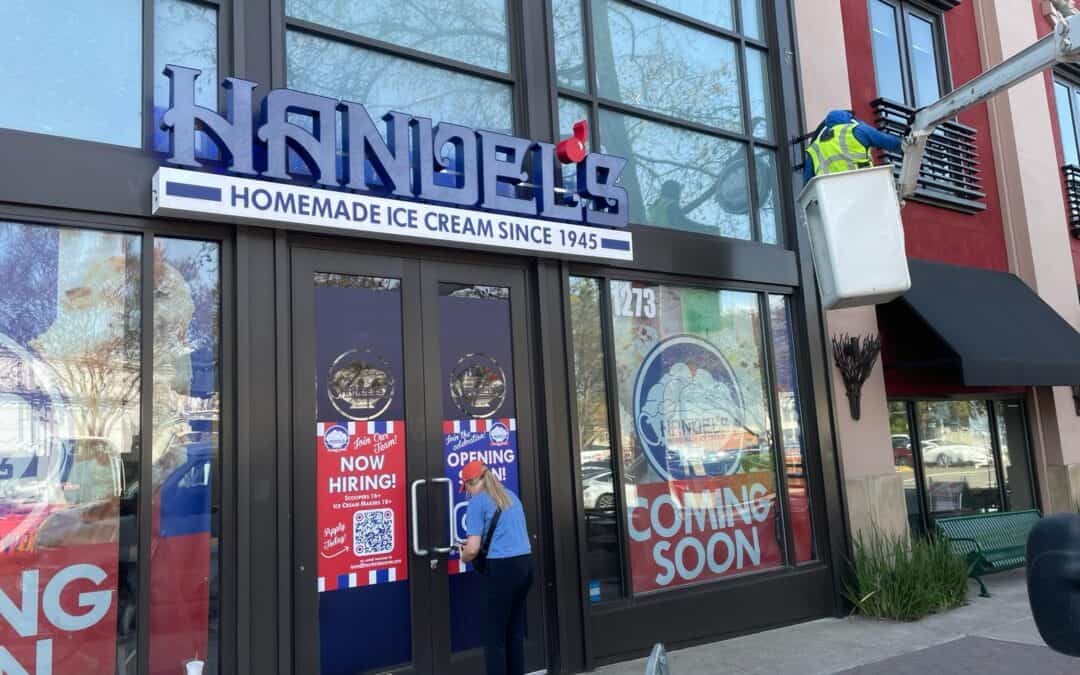
A franchise location can lose momentum before it opens if the sign package gets stuck in approvals, arrives off-spec, or fails after one California summer. That is why choosing the right franchise signage company is not a minor vendor decision. It affects opening timelines, brand consistency, street visibility, and the long-term cost of maintaining the location.
Franchise signage in California looks straightforward from the outside. The brand has standards, the site has a frontage, and the sign just needs to go up. In practice, it rarely works that cleanly. Most franchise operators are managing corporate requirements, landlord conditions, city codes, electrical needs, and a construction schedule that is already under pressure. A dependable sign partner reduces that friction by managing the details before they become delays.
What a franchise signage company should actually handle
A true franchise signage company does more than manufacture a logo panel. It should guide the project from design interpretation through fabrication, permitting, installation, and final quality control. If a provider only handles one slice of the process, someone else has to coordinate the rest. That usually falls back on the owner, contractor, or property manager, which is where delays and miscommunication start.
For franchise projects, coordination matters as much as craftsmanship. The company needs to work within established brand guidelines while still adapting the sign package to the realities of the building. Cabinet depth, raceway placement, illumination method, wall conditions, viewing angle, and local sign ordinances all affect what can actually be built and approved. A sign that looks correct on paper still has to perform in the field.
This is especially important when multiple parties are involved. Corporate may approve one design direction, the landlord may request revisions, and the city may require changes to size, lighting, or placement. A competent signage partner keeps those conversations moving without losing control of the schedule.
Why franchise signage projects are different
Not every commercial sign company is built for franchise work. Franchise signage projects carry a different level of accountability because there is less room for improvisation. Brand colors, logo proportions, letter styles, and illumination standards often need to match a national or regional system. At the same time, the local site still has to meet code and make sense for traffic flow, building architecture, and visibility from the street.
That tension is where experience matters. A company that understands franchise signage knows when standards can be preserved exactly and when an adaptation is required for compliance or function. The goal is not just to install a sign that passes inspection. The goal is to install one that supports the brand, attracts customers, and avoids expensive rework.
There is also a speed factor. Franchise openings often have marketing deadlines, staffing schedules, and inventory plans tied to a launch date. If signage slips, the location can look unfinished even when operations are ready. For an owner or developer, that creates unnecessary pressure and can weaken the first impression of the business.
Signs of a reliable franchise signage company
The most reliable providers are process-driven. They can explain how they handle surveys, drawings, permits, fabrication, installation, and punch-list items without making the customer chase updates. Fast estimates help, but speed only has value when it is paired with accuracy.
A strong franchise signage company should also be transparent about trade-offs. For example, an illuminated sign may deliver stronger nighttime visibility, but the electrical scope, permit timing, and install complexity can differ from a non-illuminated option. Channel letters may create a more premium appearance than a panel sign, but wall conditions and budget can influence whether that choice makes sense. Good guidance is practical, not generic.
Durability should be part of that conversation from the start. In markets like Fresno and the surrounding Central Valley, heat and sun exposure are not small issues. Materials, finishes, and LED components need to hold up under sustained UV exposure and temperature swings. A sign that costs less upfront but fades early, warps, or develops lighting problems can become the more expensive option very quickly.
Permits can make or break the timeline
Permitting is one of the biggest reasons franchise sign projects stall. Many business owners assume that once the design is approved, fabrication can begin immediately. In reality, city review can affect dimensions, placement, illumination, structural details, and electrical scope. If the submittal package is incomplete or inaccurate, the timeline can stretch fast.
This is where local knowledge adds real value. A sign company that regularly works in Fresno County understands that each jurisdiction may have its own review process, documentation expectations, and turnaround times. That insight helps prevent avoidable back-and-forth and protects the opening schedule.
Permit management also matters because franchise projects often involve more than one approval track. You may need landlord approval, corporate sign-off, and city approval before installation can happen. If those steps are not managed in the right order, the project can sit idle while everyone waits on someone else.
Fabrication quality shows up years later
Many commercial buyers compare sign bids as if the finished products will be the same. They rarely are. The visible design might match, but the internal components, fabrication methods, mounting details, and finish quality can vary a lot from one provider to another.
For franchise signage, consistency matters because the sign is part of a larger brand system. Uneven illumination, low-grade materials, poor paint matching, and sloppy installation all weaken that system. More importantly, they create maintenance issues that distract from operations and increase long-term cost.
A better fabrication standard usually means cleaner construction, stronger materials, efficient LED lighting, and a finish built for local weather conditions. That is not just about appearance. It affects energy use, service calls, and how long the sign keeps doing its job as a marketing asset.
Warranty coverage is another useful filter. A company willing to stand behind its work for multiple years is telling you something about how it builds. That does not guarantee zero issues, but it does reduce risk for the customer and signals accountability after installation is complete.
What commercial buyers should ask before signing
The smartest questions are not only about price. Ask who is managing permits, who is fabricating the sign, who is installing it, and what happens if city comments require revisions. Ask how the company handles brand standards when local code conflicts with the original sign criteria. Ask what materials are being used and why they are appropriate for the site.
It also helps to ask how communication will work during the project. Franchise owners and property managers do not need more vendors creating uncertainty. They need clear timelines, realistic expectations, and updates that make it easy to keep everyone aligned.
If the provider struggles to explain its process in plain language, that is usually a warning sign. Commercial signage has technical layers, but the customer experience should still feel organized and accountable.
Choosing for the long term, not just the opening
A franchise sign is often judged by whether it is installed before the grand opening. That is an understandable milestone, but it is not the only one that matters. The better question is whether the sign will still represent the brand well three to five years later.
That depends on design execution, engineering, materials, installation quality, and service support. It also depends on whether the company treated the project as a one-time order or as a business asset tied to visibility and revenue. The right signage partner sees the sign as part of the customer acquisition strategy, not just a fabricated product.
For franchise operators, developers, and commercial decision-makers, that shift in mindset matters. A sign is often the first brand impression a customer gets at the property. It should look right, perform reliably, and get installed without adding chaos to an already busy project schedule.
A dependable local partner can make that happen. In a market where timelines are tight and compliance matters, a company like California Sign Company brings value by handling design, fabrication, permits, installation, and service with one accountable process. That kind of support does more than get a sign on the building. It gives the business a stronger start and fewer problems to solve later.
When you are evaluating a franchise signage company, look past the mockup and the quote. Choose the team that can protect your brand standards, manage the approvals, build for the climate, and keep the project moving when the schedule is under pressure. That decision tends to pay off long after the lights turn on.