
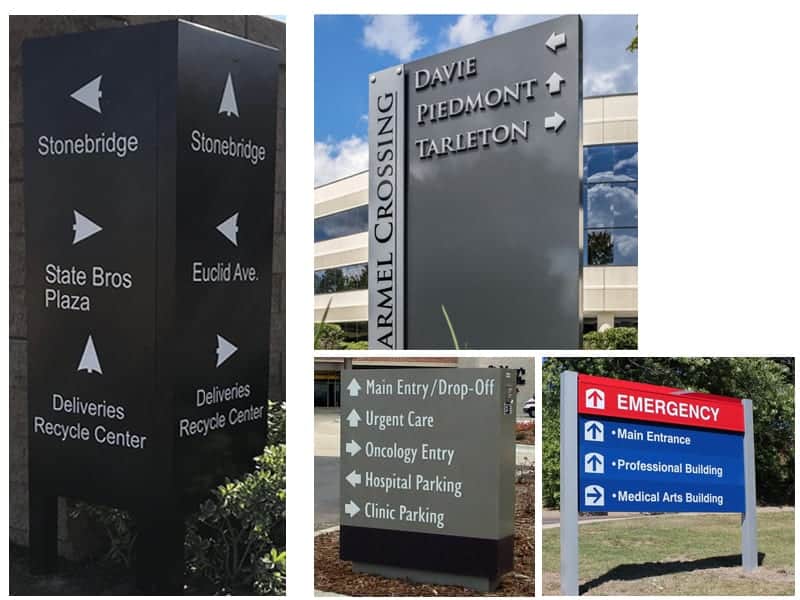
A sign can look great in a proof and still fail where it matters most – on the building, in traffic, and under real weather conditions. That is why business sign design services should never be treated as a quick graphic task. For commercial properties, retail storefronts, office buildings, churches, and multi-site brands, design has to support visibility, code compliance, brand standards, fabrication, and long-term performance.
The right sign does more than display a name. It helps customers find you, reinforces professionalism, supports leasing and tenant visibility, and works as a daily advertising asset. When the design process is handled correctly from the beginning, the final result is easier to permit, easier to manufacture, and far less likely to create delays or maintenance problems later.
What business sign design services should actually include
Many buyers hear the word design and think about fonts, colors, and logo placement. Those matter, but commercial sign design is a much broader service. A well-managed design process starts with the site, the building, the viewing distance, local code requirements, and the purpose of the sign.
For example, a storefront sign needs to be legible from the street and proportioned correctly for the facade. A monument sign may need to balance tenant visibility, traffic flow, and municipal restrictions on height or illumination. A lobby sign has different priorities – brand presentation, interior finishes, and dimensional impact often matter more than distance visibility.
Strong business sign design services also account for fabrication realities. Not every design that looks sharp on a screen will produce well in metal, acrylic, LED components, or illuminated cabinet construction. Some concepts are too delicate, too complex, or too costly to build at a commercial standard. A dependable sign partner addresses those issues early, before the project reaches permitting or production.
Why design decisions affect cost, timeline, and permits
One of the biggest mistakes in signage projects is separating design from execution. When design happens in isolation, the project often runs into preventable problems. The city rejects the submittal. The sign is oversized for the approved area. Illumination details do not meet local requirements. Structural changes increase the installation scope. What looked like a simple job turns into a delayed one.
This is where experienced business sign design services create real value. Design is not only about appearance. It is also about reducing friction. A sign concept that aligns with code, engineering needs, and installation conditions is far more likely to stay on schedule.
In California, that matters even more. Different jurisdictions may have different rules around sign area, brightness, placement, setbacks, and landlord approvals. Sun exposure, wind load, and material durability also influence design choices. A sign built for long-term performance in one setting may need different construction details in another. There is no single formula that works for every property.
Good design starts with how the sign will be used
The first question is not, “What style do you want?” It is, “What does this sign need to do?” That answer shapes everything that follows.
If the goal is attracting passing traffic, readability and contrast usually take priority over decorative detail. If the goal is reinforcing a polished brand experience inside a corporate office or medical facility, materials and finish quality may matter more than scale. If the project involves a shopping center or a multi-tenant property, consistency and wayfinding become just as important as branding.
This is why experienced designers ask practical questions early. How fast are vehicles moving past the site? Where are the main sightlines? Is the sign viewed during the day, at night, or both? Are there landlord criteria to follow? Will this sign need internal illumination, external lighting, or no lighting at all? Those answers guide a design that performs in the real world, not just in a presentation file.
The best business sign design services connect brand and visibility
A common tension in commercial signage is brand accuracy versus readability. Many companies want to reproduce their logo exactly as it appears in print or digital media. Sometimes that works well. Sometimes it does not.
Thin strokes, low-contrast colors, or highly detailed logo elements can lose impact when scaled to a building sign. A good sign design team knows how to protect brand identity while adjusting layout, depth, stroke weight, lighting, or material choices so the sign remains clear from a distance. That is not a compromise. It is smart adaptation.
This is especially important for franchise groups, regional brands, and corporate clients managing multiple locations. Consistency matters, but site conditions still vary. A design approach that respects brand standards while accounting for each property typically produces a better rollout than a rigid one-size-fits-all model.
Materials matter as much as the artwork
Sign performance depends heavily on what the sign is made from and how those materials are used. Business owners and property managers often focus first on the face of the sign, but longevity comes from the full construction approach.
For exterior signs, premium materials can mean better resistance to fading, warping, corrosion, and structural wear. LED systems should be selected for brightness, efficiency, and service life. Finishes need to hold up under UV exposure. Mounting methods must match the wall type and installation environment. If a sign is illuminated, the housing and electrical components should be designed for dependable operation, not just initial appearance.
This is one reason full-service providers tend to deliver stronger outcomes than design-only vendors. When the design team understands fabrication and installation, they can recommend materials that fit the brand, the budget, and the operating environment. That guidance helps clients avoid signs that look good at installation but deteriorate too quickly.
How a full-service process protects the project
A commercial sign project moves through several stages, and design affects all of them. The strongest outcomes usually come from a process that includes consultation, site review, concept development, permit coordination, fabrication planning, installation, and post-installation support.
That end-to-end model gives clients better continuity. Instead of handing the project from one disconnected vendor to another, the same team can carry the design intent through production and installation. Details are less likely to get lost. Timelines are easier to manage. Accountability is clearer.
For buyers, this reduces risk. Property managers do not want to chase separate vendors for revisions, permits, field measurements, and install scheduling. Franchise operators do not want inconsistencies from one location to the next. Facilities teams want signage that is installed correctly, inspected for quality, and backed by responsive support if service is ever needed.
That is where an experienced partner like California Sign Company can make the process feel more controlled. When design, fabrication, permit coordination, installation, and follow-up support are aligned, clients spend less time managing the sign project and more time focusing on the property or business itself.
What to ask before hiring a sign design partner
Not every sign company approaches design at the same level. Some provide a basic layout and leave the rest to others. Some are strong at production but weak on communication. Some can install effectively but struggle with permit planning or multi-site coordination.
A better approach is to ask how the company handles the full life of the project. Do they design with code requirements in mind? Can they evaluate the site and recommend the right sign type? Do they understand illuminated signs, dimensional letters, monument signs, and interior branding applications? Will they coordinate permits and help avoid common approval issues? What kind of warranty and support do they provide after installation?
Those questions matter because a sign is not a disposable purchase. It is a visible, long-term part of your property and brand. A lower upfront price may not be the better value if the sign fades early, requires repeated repairs, or creates delays that affect openings, tenant occupancy, or customer traffic.
Business sign design services are an investment in performance
The best sign projects are not driven by guesswork or rushed artwork. They come from a design process that respects branding, visibility, engineering, compliance, and long-term durability. When those factors are considered together, the finished sign is more likely to attract attention, represent the business well, and hold up over time.
That is the real goal of business sign design services. Not just a sign that looks good in a mockup, but one that performs on the building, supports the business, and keeps doing its job long after installation day. If you are planning a new sign, a rebrand, or a multi-location rollout, the smartest next step is to choose a design partner who treats the project like an operational asset, not just a graphic exercise.