
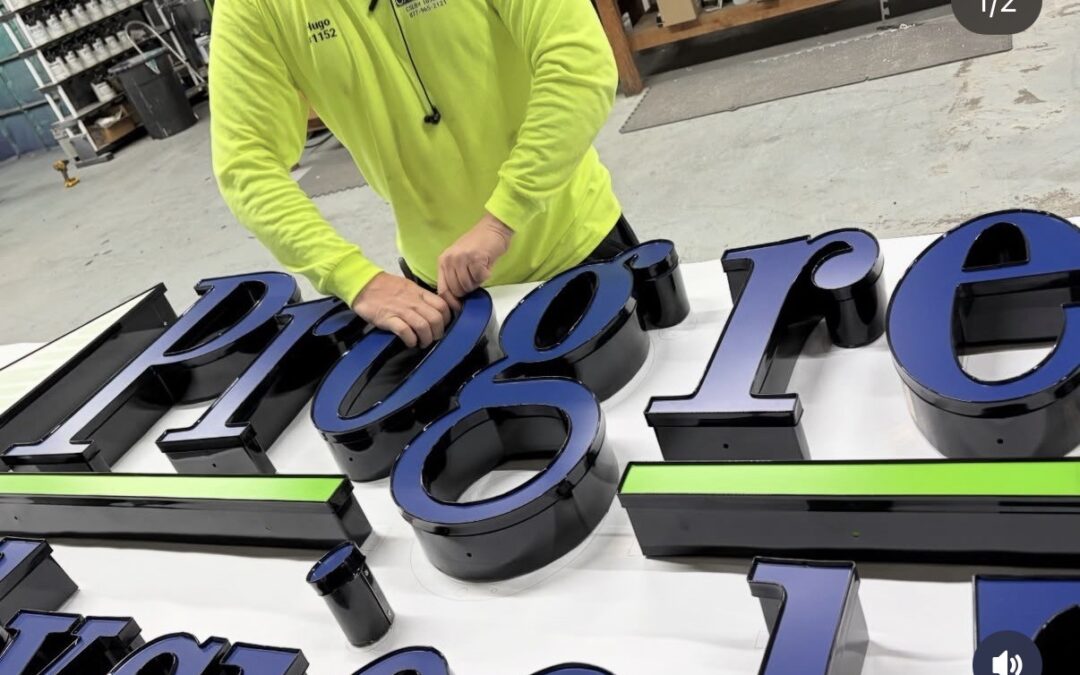
A sign usually looks simple from the street. Behind it, there is design review, engineering, permitting, material selection, fabrication, electrical planning, installation logistics, and long-term service. That is why choosing the right commercial sign fabrication company matters more than many buyers expect.
If you are ordering signage for a storefront, office building, church, shopping center, or multi-site brand, the real question is not just who can make a sign. It is who can deliver a finished sign program that performs well, meets code, supports your brand, and holds up over time. A low quote may look appealing at the start, but signage problems tend to get expensive after fabrication starts or after installation is complete.
What a commercial sign fabrication company actually does
A qualified commercial sign fabrication company should do more than manufacture a cabinet or route letters from acrylic. The best partners manage the full process from concept to completion. That includes helping refine the design, confirming site conditions, coordinating permits, selecting materials suited to the environment, fabricating the sign accurately, installing it safely, and standing behind the work after the project is done.
For business owners and property managers, this matters because most sign delays do not start in the shop. They start when dimensions are off, city requirements are missed, landlord criteria are overlooked, or installation planning happens too late. A company with true end-to-end experience can spot those issues before they affect your timeline.
This is especially important in California, where local sign codes, landlord standards, and environmental demands can vary from one city to the next. Sun exposure, wind load requirements, and electrical considerations all affect how a sign should be built. Good fabrication is not just about appearance. It is about performance under real conditions.
How to evaluate a commercial sign fabrication company in California
The first thing to look for is process clarity. A dependable vendor should be able to explain how the project moves from quote to design approval to permitting to fabrication to installation. If that process sounds vague, you are probably looking at a riskier project than the estimate suggests.
The second is material and construction quality. Not every sign is built to the same standard, even when two proposals describe similar products. Cabinet construction, paint systems, LED components, acrylic thickness, mounting methods, and internal wiring all affect lifespan and service needs. A professional company should be able to explain why specific materials are recommended for your sign type and location.
The third is installation capability. A well-made sign can still fail if it is installed poorly. Uneven mounting, improper electrical work, weak anchors, or rushed finishing can undermine the entire investment. Installation should be treated as a skilled trade, not the last step on a checklist.
Then there is support. If a sign goes dark, a face cracks, or a tenant panel needs to be updated, you do not want to start over with a new vendor. A commercial sign partner should be available after the install, not just until the invoice is paid.
Why permits and compliance should never be an afterthought
Many buyers underestimate how much permitting affects schedules and costs. In reality, permit coordination can be one of the biggest factors in whether a project moves smoothly or stalls out.
Cities may have limits on sign size, placement, illumination, structural details, or allowable messaging. Shopping centers and commercial properties often add their own design criteria on top of municipal rules. If a sign is fabricated before all approvals are complete, revisions can become costly.
A strong sign company plans for compliance early. That means reviewing codes, preparing submittals, coordinating drawings, and making sure fabrication aligns with approved plans. This work may not be visible in the final sign, but it is often what keeps a project on track.
For franchise operators and multi-location businesses, this becomes even more valuable. Standard branding must often be adapted to different local jurisdictions without losing consistency. That takes more than production capacity. It takes project management discipline.
Different projects need different fabrication strengths
Not every commercial sign fabrication company is equally strong across all sign categories. Some shops are fine for basic panels but struggle with illuminated signage. Others can handle one-off storefront signs but are not structured for larger rollouts.
If you need channel letters, monument signs, lobby branding, pylon signs, directional signage, or illuminated storefront signs, ask about direct experience with those products. The right company should understand not only how the sign is built, but how it functions in its environment.
For example, illuminated signs require attention to LED layout, brightness, power supply access, and serviceability. Monument signs often involve structural considerations, site preparation, and visibility planning. Lobby signs call for finish quality and precision because they are viewed up close. A shopping center rebranding may require phasing and tenant coordination. Each project type has its own demands.
That does not mean the biggest company is always the best choice. Sometimes a smaller team offers more attention. But if your project includes multiple locations, permit complexity, or larger-scale installations, capacity matters. You need a partner that can handle volume without losing communication or quality control.
The cost question: what buyers should really compare
Price matters, but sign buyers should be careful about comparing estimates line by line without understanding the scope behind them. One proposal may include permit coordination, engineering, installation, and warranty support, while another may cover fabrication only. On paper, the lower number wins. In practice, it may leave critical work uncovered.
A better approach is to compare total project value. Ask what is included, what assumptions are built into the quote, what could trigger added cost, and who is responsible for each phase. If a vendor cannot answer those questions clearly, that uncertainty often shows up later as change orders, delays, or service problems.
It also helps to think beyond initial cost. Commercial signage is a long-term asset. A better-built sign with quality LEDs, durable finishes, and proper installation may cost more up front but save money over time through lower maintenance and fewer failures.
What dependable service looks like during the project
Reliable service is not just about being polite. It shows up in response time, documentation, scheduling, approvals, and issue handling. Buyers should expect clear quotes, realistic timelines, regular communication, and a defined point of contact.
Good service also means setting honest expectations. Sometimes permit reviews take longer than planned. Sometimes site conditions change the installation approach. A dependable company does not disappear when that happens. It communicates early, explains the options, and keeps the project moving.
That is one reason many commercial clients prefer full-service providers. When design, fabrication, installation, and repair are handled through one team, there are fewer handoff gaps and fewer opportunities for blame-shifting. Accountability stays in one place.
California Sign Company, for example, built its approach around that model because clients want fewer variables, faster answers, and stronger follow-through from quote to final inspection.
Signs are built for visibility, but they are bought for results
Most organizations are not shopping for signage because they want to discuss aluminum returns or LED modules. They want better visibility, stronger branding, easier wayfinding, and a property that looks professional. The right fabrication partner keeps those business goals in focus.
That means recommending sign types that fit the site, not just what is easiest to produce. It means balancing appearance with budget, speed with compliance, and design intent with long-term durability. In some cases, a more complex sign is worth it because visibility is critical. In others, a simpler solution may deliver a better return.
The best commercial sign fabrication company is the one that treats your project like an operational asset, not a one-time product order. That kind of partnership reduces surprises and increases the odds that the finished sign does what it was supposed to do from day one.
When you are evaluating sign vendors, look past the mockup and the price tag. Ask how they build, how they manage permits, how they install, and how they support the sign after it goes up. A dependable answer to those questions usually tells you more than the sample photos ever will.
A good sign should attract attention. A good sign company should remove stress.