
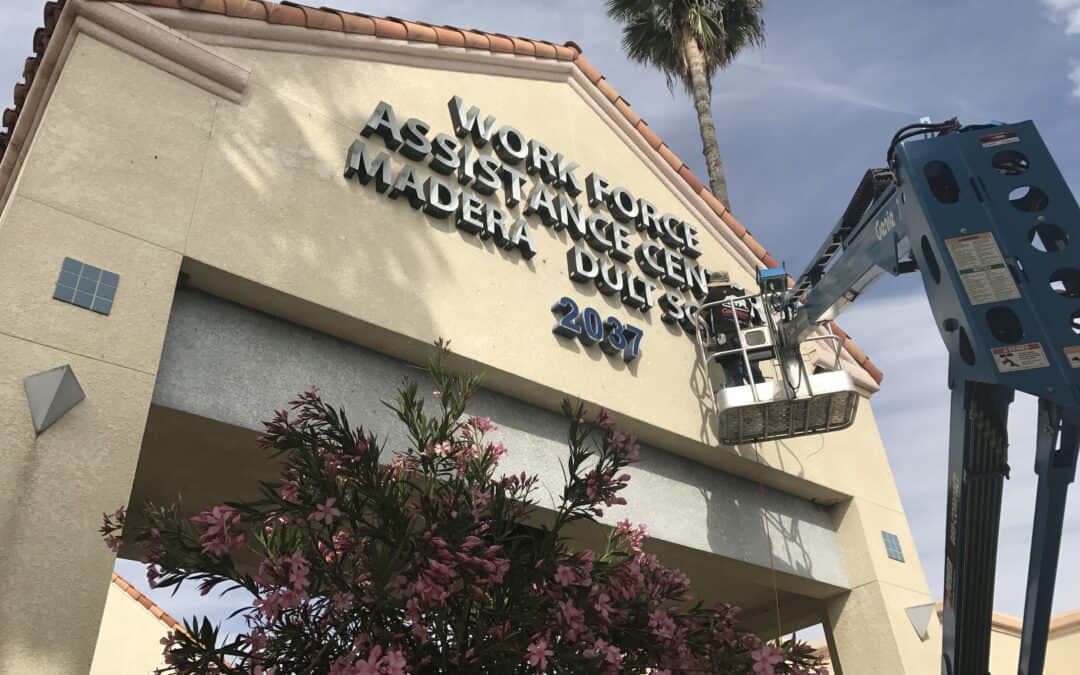
A sign can look perfect in a rendering and still fail where it matters most – on the building, under real weather, with real city requirements, and under the scrutiny of customers who notice more than most businesses think. That is why commercial sign installation services are not just the final step in a signage project. They are the point where design, engineering, permitting, fabrication, and field execution either come together correctly or create problems that are expensive to fix.
For business owners, property managers, and multi-site operators, installation quality affects more than appearance. It influences brand perception, code compliance, long-term maintenance, and how quickly a location can start benefiting from its signage investment. A professionally installed sign should look sharp on day one, hold up over time, and avoid the callbacks that come from poor mounting, wiring issues, water intrusion, or permit oversights.
What commercial sign installation services should include
A true installation service goes well beyond sending a crew to mount a sign. The best providers treat installation as part of a managed process. That starts with site review, accurate field measurements, and an understanding of the wall type, structural conditions, electrical access, and visibility from the street. If any of those details are missed early, the installation day becomes slower, riskier, and more expensive.
Permitting is another major part of the job. In California, requirements vary by city and property type, and they can affect everything from sign size and illumination to mounting method and landlord approvals. A dependable installation partner helps coordinate permit documentation so the project moves forward with fewer surprises. That matters whether you are opening one storefront or managing a rollout across multiple locations.
Good commercial sign installation services also include scheduling discipline. Businesses often need work completed around operating hours, tenant coordination, shopping center rules, or access limitations. An installer who can communicate clearly, arrive prepared, and finish on time protects more than the sign – it protects your operations.
Why installation quality matters more than many buyers expect
The most common sign failures are rarely caused by the concept itself. They usually come from execution. A poorly aligned channel letter set can make a brand look careless. Weak waterproofing around penetrations can lead to staining or electrical issues. Inadequate anchoring can create safety concerns, especially in areas where wind exposure must be taken seriously.
There is also a financial side to installation quality. A cheaper install can become more expensive if it leads to repairs, service interruptions, or a shortened sign lifespan. For illuminated signs, incorrect electrical work may reduce LED performance or create uneven lighting that hurts visibility at night. For monument and pylon signs, improper base preparation or structural installation can affect both appearance and durability.
This is where experienced project management makes a difference. The installation team should understand not just how to place the sign, but why the sign was built a certain way, how it needs to perform, and what local conditions it will face over time.
Commercial sign installation services for different sign types
Not every sign installs the same way, and that is where many generic vendors fall short. A lobby sign has very different requirements than a large illuminated storefront sign. Dimensional letters require clean spacing, reliable mounting, and finishes that hold up indoors or out. Channel letters need precise raceway or direct-mount installation, proper wiring, and balanced illumination. Monument and pylon signs introduce a different level of site work, structural planning, and visibility considerations.
Storefront signs often require coordination with landlords, shopping center standards, and electrical access in active retail environments. Church signage and campus signage may involve wayfinding, donor recognition, or multiple sign types across one property. Franchise programs introduce another layer, where brand consistency matters just as much as local compliance.
That is why the installation process should be matched to the sign type and the site. A one-size-fits-all approach usually creates delays, compromises, or unnecessary change orders.
Permits, codes, and California conditions
In California, sign installation has to account for more than aesthetics. Sun exposure, wind loads, mounting surfaces, and jurisdiction-specific code requirements all affect how a sign should be built and installed. A sign that performs well in one city or on one building type may need a different approach elsewhere.
Permit coordination is often the part clients want off their plate, and for good reason. City review timelines can be unpredictable, submittal requirements can vary, and revisions are common. An installation provider with permit experience helps reduce friction by preparing accurate documentation and keeping the process moving. That does not mean every permit moves quickly – some cities simply take longer than others – but it does mean fewer preventable delays.
For property managers and facilities teams, this support is especially valuable. It reduces back-and-forth between tenants, landlords, city departments, and installers. It also helps keep projects aligned with lease requirements and site standards.
What a well-managed installation process looks like
The strongest sign projects feel organized from the start. First comes consultation and quoting, where the scope, sign type, site conditions, and timeline are discussed clearly. Then the project moves into design alignment, field verification, permitting, fabrication, and installation scheduling. Each phase should support the next.
By the time installation day arrives, the crew should already know the site conditions, hardware requirements, lift needs, access plan, and electrical details. This preparation is what keeps work efficient and reduces disruption to the business or property. After installation, a quality inspection should confirm alignment, finish quality, illumination, structural integrity, and overall presentation.
That final review is not a minor step. It is where professional standards show up. A sign may technically be installed, but if the lighting is inconsistent, the mounting points are sloppy, or the face is not sitting properly, the job is not truly complete.
Choosing a provider for commercial sign installation services
If you are comparing vendors, look beyond the initial quote. Ask how they handle permits, who manages scheduling, whether installation is subcontracted or coordinated directly, and what kind of warranty support is available after the sign is up. A lower price may reflect a narrower scope, weaker materials, or less project oversight.
It is also worth asking how the provider handles statewide or multi-location work. For organizations expanding across regions like Los Angeles County, Sacramento County, Fresno County, or Sacramento County, consistency matters. You want one process, one standard of quality, and one partner who can keep branding and installation execution aligned from site to site.
A dependable provider should also be candid about trade-offs. For example, the fastest timeline may not always be available if permit review is outside anyone’s control. A lower-cost material option may reduce upfront spend but affect longevity under heavy sun exposure. Honest guidance builds trust because it helps buyers make decisions with full visibility, not just optimistic promises.
Installation is only part of long-term sign performance
A sign should not become your next maintenance headache. That is why support after installation matters almost as much as the installation itself. If lighting needs attention, faces are damaged, or wear appears earlier than expected, responsive service protects your investment and keeps your location looking professional.
This is where an end-to-end provider has a clear advantage. When the same company understands the design intent, fabrication specs, permit history, and installation details, service calls tend to move faster and with fewer assumptions. California Sign Company approaches signage that way – as a complete service, not a handoff between disconnected vendors.
For buyers, that means less time chasing answers and more confidence that the sign was built and installed to perform as intended. It also means warranty coverage has real value because the company standing behind the work knows exactly how the project was executed.
The real value of getting installation right
Commercial signage is part branding asset, part wayfinding tool, and part long-term advertisement. If installation is rushed or treated as a basic labor task, the whole investment loses value. If installation is planned correctly, permitted properly, and executed with care, the sign does what it is supposed to do – attract attention, reinforce professionalism, and keep working for years.
That is what most buyers are really looking for. Not just a sign on a wall, but a partner who can manage details, reduce risk, and deliver a finished result that looks right and lasts. When commercial sign installation services are handled with that level of discipline, the project feels simpler from the start and performs better long after the crew leaves the site.
If you are planning a new sign or replacing an underperforming one, the best next step is to choose a provider that treats installation as a critical part of the outcome, because that is where good signage becomes a dependable business asset.